



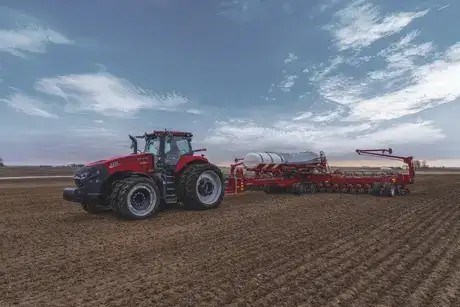
Case IH Machine Control Powered by ISOBUS

Double tap to zoom


Features

Advantages

Bringing it All Together

ISOBUS universal protocol brings several advantages to agriculture:

Compatibility. Standardized communications make it easy to connect different components with enhanced integration. ISOBUS unlocks plug-and-play capabilities between the implement and display, regardless of manufacturer.

Automation. Implements can control the tractor for increased task efficiency, consistent and improved agronomic outcomes, and greater operator experience, regardless of expertise.

Uncompromised in-cab experience. Universal terminals allow for implement applications to run in a single display, reducing the need for multiple outlets to manage multiple implements and tasks.

Enhanced data exchange. Data interoperability offered via the ISOBUS 11783 standard produces a flawless agronomic data exchange between displays and FMIS platforms.
ISOBUS Classes

Different Classes to Fit Your Needs

ISOBUS Class 1: Implement provides feedback via in-cab display.

Example: track individual bale data from Case IH RB5 series round balers

ISOBUS Class 2: Basic controls from tractor or display to the implement.

Example: Setting up the implement and controlling the depth with Soil Command​

ISOBUS Class 3: Incorporate global positioning inputs, two-way communications and two-way controls between tractor and implement, facilitated by an ISOBUS-compliant display. This allows for both implement automation and for the implement to control certain tractor functions such as ground speed.

Example: Let the baler control the tractor with Feedrate Control on select Case IH large square balers

Specifications

Sorry, currently there are no specs but check back with us later.